Home · News & Insights · IHD Body
Employer biometric screening vs at-home blood testing: how wellness programs choose

Employer biometric screening usually means an onsite event where staff measure blood pressure, height, weight and waist, plus a fingerstick or venous blood test. At-home blood testing mails collection kits to employees, who return samples to a lab. Most wellness programs choose based on where people work, which measures they need, and how results lead to follow-up care.
What employer biometric screening includes
The HERO, ACOEM and Care Continuum Alliance consensus statement describes biometric screening as one part of a broader employee health management program, not a stand-alone test. A typical screening covers:
- Blood pressure
- Height, weight and body mass index (BMI), sometimes waist circumference
- A lipid panel (total cholesterol, HDL, LDL and triglycerides)
- Glucose or hemoglobin A1c (HbA1c)
Screening finds risk factors. It does not diagnose disease, and results should point employees to their own health care provider.
The evidence supports pairing screening with follow-up. The CDC-supported Community Preventive Services Task Force recommends worksite health risk assessments with feedback when combined with health education. It found strong evidence for improvements in blood pressure and cholesterol, but insufficient evidence for assessments used alone.
Onsite vs at-home biometric screening: the core trade-offs
The two models differ more in logistics than in lab science. In both, a clinical laboratory runs the blood tests. What changes is who collects the sample, where, and what else can be measured at the same time.
Onsite screening events
An onsite event brings phlebotomists or screeners to the workplace, often for one or two days.
- What it does well: measures blood pressure, BMI and waist in person, and can include a venous draw for a wider test menu.
- Where it struggles: remote, hybrid, shift and multi-site employees who are not on site that day.
- Operational load: scheduling, private space, staffing and moving samples to the lab on time.
At-home blood testing
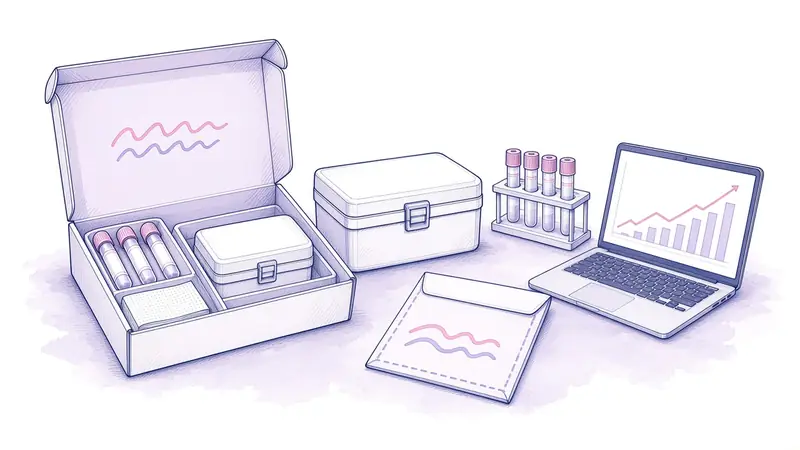
At-home programs ship a self-collection kit to each employee. The employee collects a small capillary blood sample and mails it back for testing.
- What it does well: reaches distributed and remote workforces, and lets employees test on their own schedule.
- Where it struggles: it cannot measure blood pressure, height, weight or waist. Programs usually ask for self-reported numbers or a separate measurement option.
- Test menu limits: only tests validated for at-home collection should be offered this way. Lipid panels and HbA1c are commonly validated for home collection. A full comprehensive metabolic panel (CMP) generally is not, because it needs prompt centrifuging.
Hybrid programs
Many employers combine the two models: onsite events at large locations, at-home kits for everyone else, and sometimes a provider-visit form for employees who prefer their own doctor. The main design challenge is making results comparable, so everyone is measured against the same tests and reference ranges.
How wellness programs choose
These questions help a benefits team or wellness vendor decide on a model.
- Where do employees actually work? If most people work at a few large sites, onsite events are efficient. If they are remote or spread across many states, at-home kits widen access.
- Which measures does the program need? Programs built around blood pressure or BMI need an in-person or self-reported option. Blood-only goals, such as lipids and HbA1c, suit at-home collection well.
- Is the program participatory or outcome-based? This affects legal design (see below) and how much measurement precision the program needs.
- What happens after results? Plan how employees get their results, who explains out-of-range values, and how people connect to care.
- How will you track change over time? Use the same lab, tests and collection method each year where possible so results stay comparable.
Clinical guidelines to keep in view
Screening panels should follow current preventive guidance, not just vendor defaults. The USPSTF recommends screening adults aged 35 to 70 with overweight or obesity for prediabetes and type 2 diabetes, using fasting glucose, HbA1c or an oral glucose tolerance test. Because HbA1c does not require fasting, it is easier to use in both event and at-home settings.
For blood pressure, the USPSTF recommends screening adults 18 and older with office measurement, and confirming high readings outside the clinic before treatment starts. A single workplace reading is a prompt to follow up, not a diagnosis.
Privacy and wellness-program rules
Biometric screening touches several federal laws. This is a general overview, not legal advice. Work with benefits counsel on your specific program.
- ADA: Medical exams in a wellness program must be voluntary. The EEOC publishes a sample wellness program notice explaining what is collected, how it is used and who can see it. The EEOC's 30% incentive limit was removed effective January 1, 2019 after a court ruling, so incentive design deserves careful review.
- GINA: Health risk assessments that ask about family medical history count as genetic information. They must follow the rules in 29 CFR 1635.8.
- HIPAA and the ACA: When a wellness program is tied to a group health plan, outcome-based rewards, such as hitting a cholesterol target, must follow nondiscrimination rules. The Department of Labor summarizes these protections.
Whatever model you choose, employers should see aggregate, de-identified reporting only. Individual results should go to the employee.
Set realistic expectations
Screening programs work best as one part of a broader plan. In a randomized trial at 160 worksites published in JAMA, a multicomponent wellness program increased some self-reported healthy behaviors. After 18 months it showed no significant effect on clinical markers such as cholesterol, blood pressure and BMI. Participation in surveys and screenings at program sites ran at roughly 36% to 45%.
The takeaway is not that screening is pointless. Access, follow-up and consistent measurement matter as much as the test itself.
Lab questions to ask any screening partner
- Is the laboratory CLIA-certified, and is it licensed where your employees live?
- Which tests are validated for at-home collection, and which need a venous draw?
- Can onsite, at-home and provider-collected samples go to the same lab for comparable results?
- How do employees get results, and how do out-of-range values reach them quickly?
- What reporting does the employer receive, and is it de-identified?
IHDLab, a CLIA-certified lab (05D2040304) licensed in California, New York and Maryland, works with employers and wellness vendors on both models. At-home kits ship to all 50 states, and a company's own phlebotomist can draw onsite anywhere in the US and overnight the samples to the lab. You can browse the at-home test list, read about white-label test kits for wellness vendors, or see how employer testing programs are set up.
This article is for general education and is not medical or legal advice.